
Control Room Display Systems Boston, MA
As part of our Video Wall Installation Boston MA services, we design and install control room display systems that run around the clock: hospital command centers in Longwood, security operations centers downtown and network operations rooms along Route 128. Our crews handle the wall, the processing, the operator consoles and the redundancy that keeps everything on screen when something fails.
Planning or upgrading an operations center? Book a site walk-through.
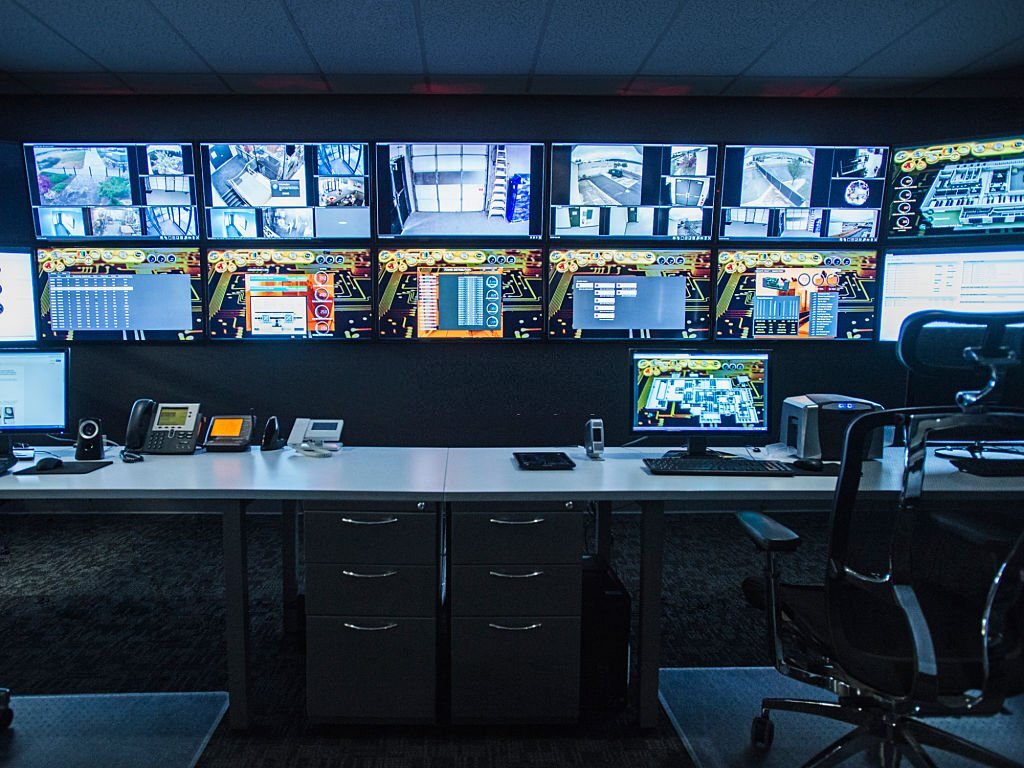
How we build control room display systems in Boston, MA
A lobby video wall can go dark for an afternoon and nobody gets hurt. A control room wall cannot. Dispatchers, clinicians, security teams and network engineers make decisions from what is on screen, so every system we build starts with one question: what happens when a part fails?
That shapes every choice. We specify displays rated for continuous 24/7 operation, use processors with redundant inputs and power, put critical hardware on a UPS, and lay out content so a single failed panel or source never blanks the whole wall. Then we plan sightlines from every seat, so the operator at the far console can read the same text as the supervisor in the middle.
Most Boston operations centers are not new rooms. They sit in older hospital wings, converted office floors or basement spaces with low ceilings and limited power. We survey the structure, cooling and electrical capacity first, add backing or freestanding frames where the walls cannot take the load, and coordinate dedicated circuits with your licensed electrician.
Many rooms also cannot stop working while we build. We stage installs in sections, keep a temporary display live, and schedule the final cutover for your quietest shift, finishing with labeled cabling, as-built drawings and operator training.
Our video wall and AV services in Boston, MA
Most projects don’t stop at the wall itself. Here’s everything else our crews handle across the city and the surrounding towns.

Digital Signage Installation
Wall screens, kiosks and media players for lobbies, campuses and storefronts, with content scheduling set up so your team can update messages without calling us.

AV System Integration
Displays, speakers, microphones and touch-panel control tied together, so a single button sets up the whole room.
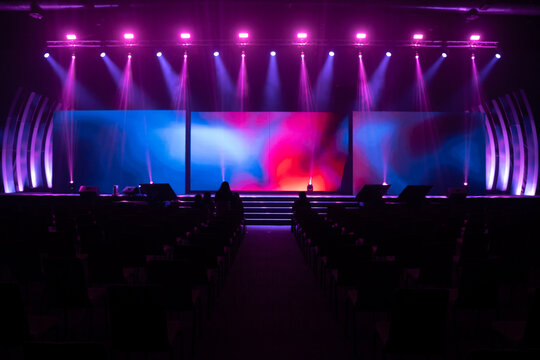
LED Display Rental & Event Setup
Temporary LED walls for conferences, galas and trade shows at venues across the city, delivered, rigged, run and taken down on your schedule.

Structured Network & AV Cabling
Cat6, fiber and low-voltage runs planned around your displays, routed through old-building chases or new ceiling plenums and labeled end to end.
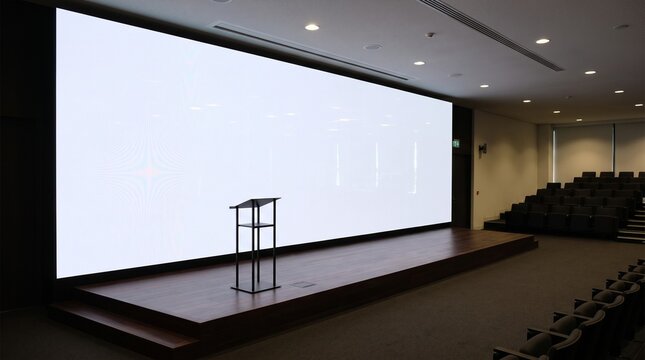
Projector & Projection Screen Install
Ceiling-mounted projectors and fixed or motorized screens for lecture halls, auditoriums and training rooms, aligned and focused on site.
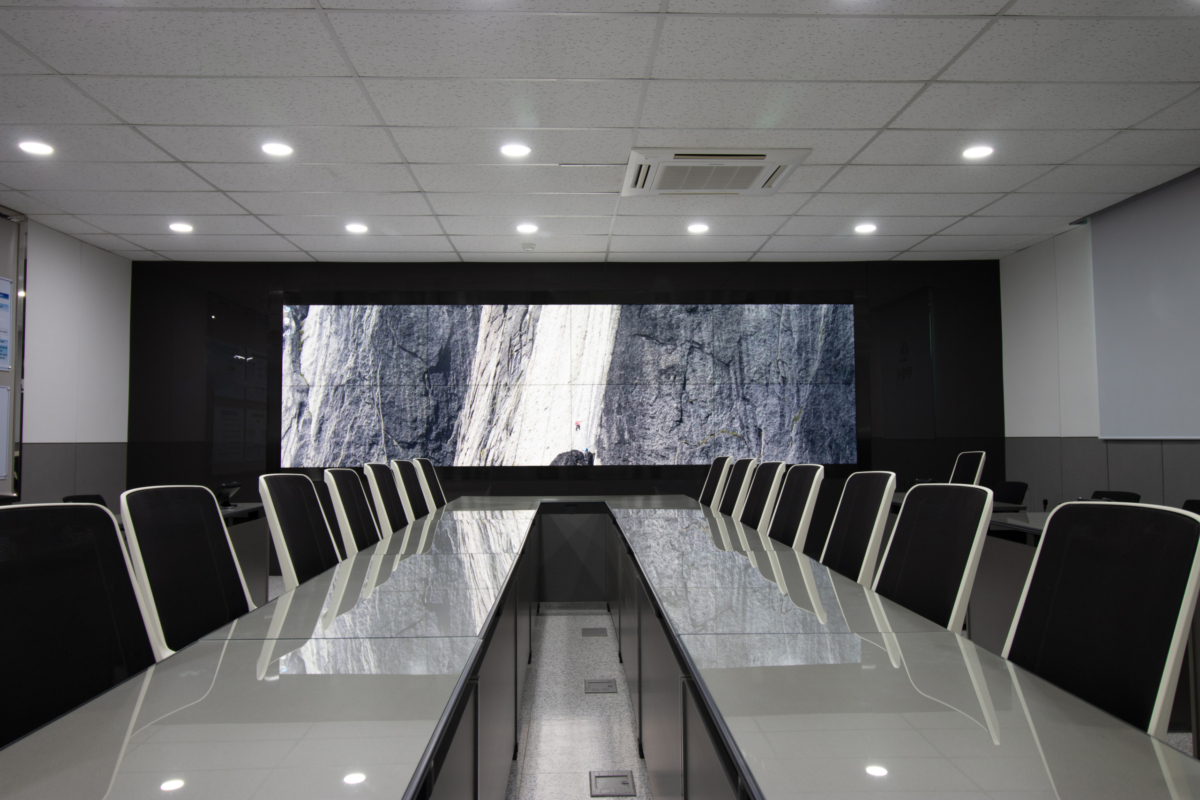
Conference Room AV Solutions
Displays, cameras and conferencing gear for huddle rooms and boardrooms, set up to work with Teams, Zoom and Google Meet.

Video Wall Maintenance & Repair
Recalibration, panel and power-supply replacement, and scheduled service for existing walls, including ones another crew put in.
Control room systems we install across Boston, MA
From a single monitoring wall to a full operations floor, these are the rooms that come through our schedule most often:
- Hospital command centers and patient-flow walls
- Security operations centers with camera and access-control feeds
- Network and IT operations centers
- Utility, energy and facilities monitoring rooms
- Transportation and logistics dispatch centers
- Campus public safety and emergency operations centers
- Trading floor and market data walls
- Building management and lab environmental monitoring
- Operator consoles with multi-monitor mounts and KVM
- Replacement of aging rear-projection cube walls
- Processor and control software upgrades on existing walls
- Temporary or mobile walls for emergency operations
Control room display specifications for Boston, MA projects
Viewing distance, content and hours of operation decide the hardware. A wall showing static maps and dashboards all day has very different needs from one cycling camera feeds.
| Specification | Narrow-bezel LCD wall | Fine-pitch LED wall | Operator console displays |
|---|---|---|---|
| Typical configuration | 46″ or 55″ panels in 2×3 to 4×6 arrays | 0.9–1.9 mm pixel pitch cabinets, sized to the wall | 2–6 monitors per position on articulating or console mounts |
| Rated operation | 24/7 | 24/7 | 24/7 or extended-duty |
| Visible seam | 0.88–3.5 mm bezel-to-bezel | None (seamless cabinets) | Not applicable |
| Static content | Use image-retention protection and periodic layout shifts | Well suited to maps and dashboards left on screen | Screen savers and timeouts per your security policy |
| Redundancy | Redundant processor inputs and power, spare panels on site | Redundant controllers, dual power and data loops | Sources reachable from more than one position via KVM |
| Signal distribution | Processor-fed over HDBaseT or fiber | Sending and receiving cards over Cat6 or fiber | KVM or AV-over-IP to the wall and other desks |
| Best viewing distance | From about 6 ft | From about 3–8 ft depending on pitch | About 2–3 ft |
| Local site notes | Good fit for low-ceiling rooms in older buildings | Check cooling and electrical capacity before ordering | Plan cable management through raised floors or console troughs |
Our control room installation process
Every project follows the same five steps, built around keeping your operations running.
-
Operations review
We sit with your operators and supervisors to learn what they watch, how many sources feed the room and which views must never go dark.
-
Room and system design
You get wall size, sightline drawings, console layout, processor and KVM design, redundancy plan, power and cooling loads, and a fixed quote.
-
Prep and infrastructure
We build backing or freestanding frames, pull fiber and Cat6, and coordinate dedicated circuits, UPS and network ports with your electrician and IT team.
-
Staged install and cutover
The wall and consoles go in section by section while a temporary display stays live, then we switch over during your quietest shift.
-
Testing and training
We run failover tests, program layout presets, train operators and supervisors, and hand over labeled cabling and as-built documentation.
From sightlines to failover in Boston, MA
A control room is only as reliable as its weakest link. These are the four areas every project draws on.
Sightlines and ergonomics
We set wall height, size and console spacing so every operator can read the smallest text on screen without craning, and so desk monitors never block the view of the wall. Lighting and glare from windows or overhead fixtures are checked before anything is mounted.
Redundancy and power
Redundant processors, dual power supplies, UPS protection and documented spare parts mean one failure becomes a maintenance ticket, not an outage. We test failover before handover so you know exactly how the system behaves.
Signal routing and control
KVM and AV-over-IP let operators control several computers from one desk, push any source to the wall and share views with colleagues. Layout presets switch the whole room between normal operations and incident mode in one step.
Network and security coordination
Control room hardware often touches sensitive systems. We work with your IT and security teams on network segmentation, device credentials and access rights per operator, and we document every connection for your audits.
Control room projects across Boston, MA
Healthcare, finance, education, life sciences and technology all run operations rooms here. These are the kinds of projects we plan for.
Hospital command centers
Patient-flow, bed-management and transport dashboards on walls that never switch off, installed in phases inside working hospital buildings.
Security operations centers
Camera grids, access-control alerts and incident maps for corporate security teams, with operators able to pull any feed to the wall.
Network operations centers
Monitoring walls for data centers and technology companies, showing network health, ticket queues and status pages around the clock.
Public safety and emergency operations
Campus police dispatch and emergency operations rooms that can switch between daily monitoring and incident response layouts.
Lab and facilities monitoring
Building management, freezer alarms and environmental monitoring walls for research facilities where a missed alert can cost months of work.
Utilities and dispatch
Operations and dispatch rooms for utilities, logistics and service fleets, with map-heavy content on seamless LED.
Control room questions from Boston, MA organizations
Straight answers to what operations managers ask us most before a project.
Can you install a new display system without shutting down our operations center?
Yes. In a live control room we usually stage the work: a temporary display or a portion of the old wall stays up while the new wall is built in sections, and cutover is scheduled for the quietest shift you have. Most of the noisy structural and cabling work happens off-hours or behind temporary partitions.
Should a control room use LCD or LED video walls?
Narrow-bezel LCD walls cost less per square foot and work well for dashboards and camera grids viewed from a few feet back. Fine-pitch LED has no seams, so text and maps never get cut by a bezel, and it holds up better to constant static content. The right choice depends on viewing distance, content type, budget and how many hours a day the wall runs.
What happens if a processor or panel fails?
We design for it. Critical systems get redundant processors or controllers, dual power supplies where the hardware supports them, and power protection on a UPS. Layouts are set up so a single failed panel or input does not take down the whole wall, and we keep spare parts recommendations in your documentation.
Can operators share and move content between their desks and the wall?
Yes. With KVM or AV-over-IP distribution, operators can push a workstation, camera feed or application to the wall, pull a source back to their desk and control several computers from one keyboard and mouse. Access rights can be set per operator or role.
Can you upgrade our existing control room wall instead of replacing everything?
Often. We can replace aging rear-projection cubes or LCD panels while keeping usable mounting structures, cabling or processors, or upgrade the processor and control software on a wall whose panels still have life left. After a site survey we tell you which parts are worth keeping.
Contact our Boston, MA control room installers
50 Franklin St, Boston, MA 02110Phone: (978) 783-4632
Email: [email protected]
To get an accurate quote faster, have these ready when you reach out:
- Room dimensions, ceiling height and a few photos of the space
- Number of operator positions and how many sources feed the room
- Hours of operation and whether the room must stay live during the install
- Any existing wall, processor or KVM you want to keep
- Building rules: after-hours work, freight elevator or insurance requirements
- Your target completion date
Ready to plan your operations center? Talk to our crew today.